

Green industrial parks: A key factor in attracting the next generation of FDI
Share:
As international investment increasingly prioritises sustainable development, green industrial parks are emerging as a new competitive benchmark for the market. The attractiveness of an industrial park is no longer determined solely by land availability or rental rates. Today, competitiveness depends increasingly on infrastructure quality, operational capability, ESG performance and the ability to create an efficient and sustainable production ecosystem for investors.
1. A new competitive landscape for industrial parks
Vietnam’s industrial real estate market is undergoing a significant transformation.
For many years, industrial parks competed mainly on the availability of land and attractive rental prices. That model is changing as higher-quality FDI becomes more selective about where capital is deployed.
According to Avison Young Vietnam, green industrial parks are no longer simply a short-term marketing trend. They are increasingly becoming a new competitive standard that can influence an industrial park’s position in attracting international investment.
This creates pressure on industrial park developers to reconsider traditional development models and move toward more sustainable production ecosystems from the earliest planning stages.
The shift reflects a broader change in market expectations. Competition is no longer simply about “having available land”, but about “providing an investment-ready ecosystem that meets international standards.”
This is the foundation on which green industrial parks are becoming a new benchmark for attracting high-quality FDI.
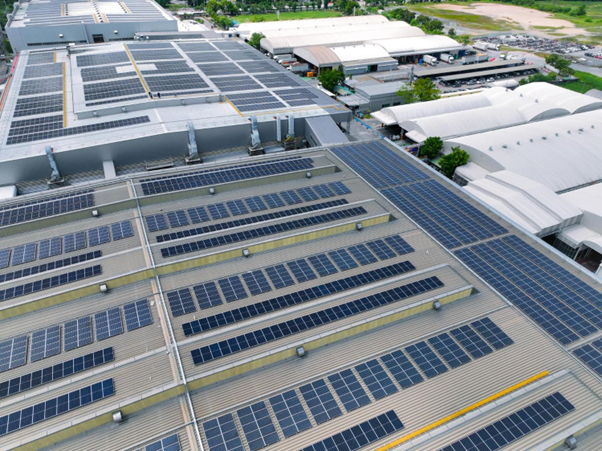
2. ESG is becoming an entry requirement for investment
One of the strongest drivers behind the growth of green industrial parks is the increasing importance of ESG - Environmental, Social and Governance - in the site-selection process of multinational corporations, particularly those from Europe and the United States.
Carbon emissions, renewable energy, resource management and transparency in environmental reporting are no longer optional advantages. They are becoming fundamental requirements in project due diligence.
International investors increasingly require their supply chains to align with global sustainability commitments. As a result, industrial parks in Vietnam must be able to demonstrate credible ESG performance if they want to remain on the shortlist of major multinational corporations.
For this reason, a green industrial park should not be understood simply as a development with more trees or better landscaping.
Its real value lies in how it is designed and operated to reduce environmental impacts, improve resource efficiency and give investors confidence in the long-term sustainability of their operations.
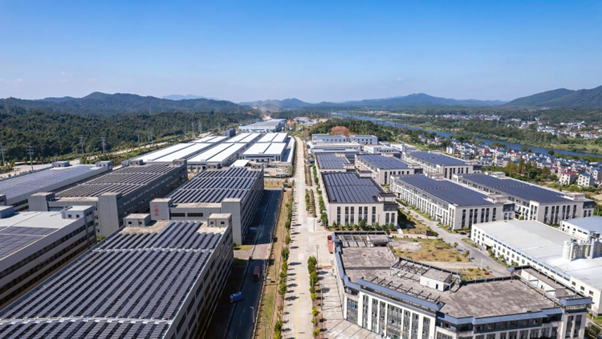
3. Infrastructure and operations are becoming key differentiators
In the past, the competitive advantage of an industrial park was often associated with large land reserves and lower rental costs.
Today, the focus is shifting toward the quality of technical infrastructure and the ability to operate that infrastructure effectively.
Investors are paying greater attention to factors such as:
- Compliant wastewater treatment systems
- Access to renewable energy
- Strong transport connectivity
- Professional industrial park management
- Reliable utility and infrastructure services
A genuinely green industrial park must be able to demonstrate efficient resource management, lower operational emissions and the ability to support tenant companies in meeting their own sustainability requirements.
This means that industrial park management capability is increasingly becoming a form of “soft infrastructure” - less visible than roads or utilities, but highly influential in investment decisions.
As a result, competition among industrial parks is gradually shifting from rental price to integrated value.
Industrial parks with stronger infrastructure, more complete services and better operational management are better positioned to attract higher-quality investment projects.
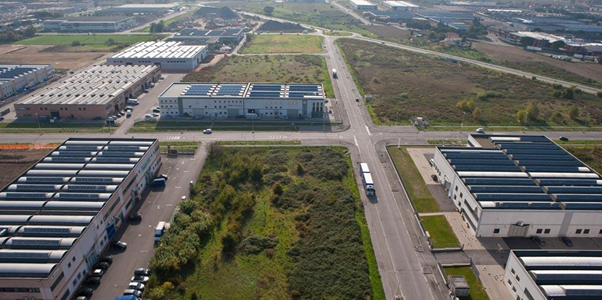
4. Intergrated industrial park are becoming the next development model
Another defining feature of the new market is the emergence of the integrated industrial park model.
These developments are no longer simply locations for factories. They increasingly combine manufacturing with logistics, supporting services, worker amenities, digital management systems and environmental infrastructure within a coordinated masterplan.
This model can generate significantly more value than a traditional industrial park.
It allows businesses to optimise time, reduce operating costs, improve productivity and respond more effectively to the requirements of global supply chains.
At the same time, integrated developments can support more sustainable local economic growth by attracting projects with higher technological content and greater added value.
Over the long term, integrated industrial parks are closely aligned with Vietnam’s evolving development priorities: moving away from growth based purely on volume and toward a model focused on quality, sustainability and socio-economic efficiency.

5. The key to retaining high-quality FDI
Green industrial parks are becoming a new competitive benchmark not because sustainability is a temporary trend, but because high-quality investors are increasingly prioritising compliant infrastructure, professional operations and clear ESG commitments over land availability and rental cost alone.
There are three areas industrial park developers should focus on:
- Treat ESG as an entry requirement for investment
- Invest substantively in infrastructure and operational capability
- Move toward integrated and sustainable industrial park models
This makes one point increasingly clear: developing green industrial parks is not simply a communications strategy or a matter of image.
It is becoming a practical competitive strategy for strengthening Vietnam’s position on the regional investment map.
Latest news

GRI standards now available in Vietnamese: What it means for ESG Reporting in Vietnam
On 14 September 2026, the Global Reporting Initiative (GRI) announced that the latest versions of its complete sustainability reporting Standards are now available in Vietnamese. The release covers the revised Universal Standards, all current Sector Standards and the latest Topic Standards, including GRI 101: Biodiversity 2024, GRI 102: Climate Change 2025 and GRI 103: Energy 2025. [1] GRI first made its Standards available in Vietnamese in 2017. The 2026 update brings Vietnamese-language users up to date with the current modular system and gives companies across the country direct access to the same reporting framework used internationally to identify, manage and disclose impacts on the economy, environment and people. [1] GRI is also expanding engagement in Vietnam through training, technical guidance and knowledge-sharing, with particular attention to small and medium-sized enterprises (SMEs). According to GRI, these programs are intended to help organizations assess sector-specific impacts, strengthen value-chain resilience and respond to disclosure expectations from international markets and sustainable finance providers. [1]

Green Finance in Vietnam: Buildings Seeking Capital Must Start with Data
On 18 September 2026, the Vietnam International Financial Centre in Da Nang (VIFC-DN) identified green finance and the carbon market as priority areas for development. The announcement was not accompanied by a specific lending product, but it sent a clear signal about the direction of green capital in the years ahead: projects will increasingly need to demonstrate environmental performance through data that can be measured, reviewed and independently verified. For developers, industrial asset owners, FDI companies and building operators, the key question is no longer simply “Is this building green?” The more important questions are: “What data proves that it is green, who verifies that data, and will the data continue to be maintained after financing has been disbursed?”


Circular economy under scarcity pressure: Is resource autonomy the solution?
Amid increasing resource scarcity and escalating geopolitical instability, the concept of resource autonomy is emerging as a strategic priority. This article examines how resource autonomy not only complements—but may even surpass—the circular economy as a framework for enabling industrial systems to adapt to the future.

Advancing Green Building Materials for Sustainable Development
As pressure to reduce carbon emissions continues to intensify, green building materials are becoming an increasingly important direction for Vietnam’s construction industry. Green material solutions can help improve energy efficiency, reduce operating costs and minimise environmental impacts. At the same time, the use of environmentally responsible materials can support projects seeking green building certifications such as LEED, LOTUS and EDGE. For businesses, this is becoming an important factor in strengthening competitiveness and supporting long-term sustainable growth.

Green construction is no longer a choice - It is becoming the cost of staying in business for Vietnamese companies
Vietnam’s construction industry is entering a period of transformation on an unprecedented scale. In the past, “green construction” was often treated as a branding trend or a marketing advantage. Today, ESG requirements, emissions audits and low-carbon standards are increasingly becoming prerequisites for companies seeking to participate in global supply chains. At the seminar “Science, Technology and Sustainable Development”, organised by the Ho Chi Minh City Construction and Building Materials Association (SACA), experts shared a common message: the construction industry no longer has much time to “prepare” for the green transition - action needs to start now.
Build Green, Build with ARDOR Green

