

Green construction Is no longer a choice - It is becoming the cost of staying in business for Vietnamese companies
Share:
Vietnam’s construction industry is entering a period of transformation on an unprecedented scale. In the past, “green construction” was often treated as a branding trend or a marketing advantage. Today, ESG requirements, emissions audits and low-carbon standards are increasingly becoming prerequisites for companies seeking to participate in global supply chains.
At the seminar “Science, Technology and Sustainable Development”, organised by the Ho Chi Minh City Construction and Building Materials Association (SACA), experts shared a common message: the construction industry no longer has much time to “prepare” for the green transition - action needs to start now.
A new pressure on construction: faster, more cost-efficient and greener
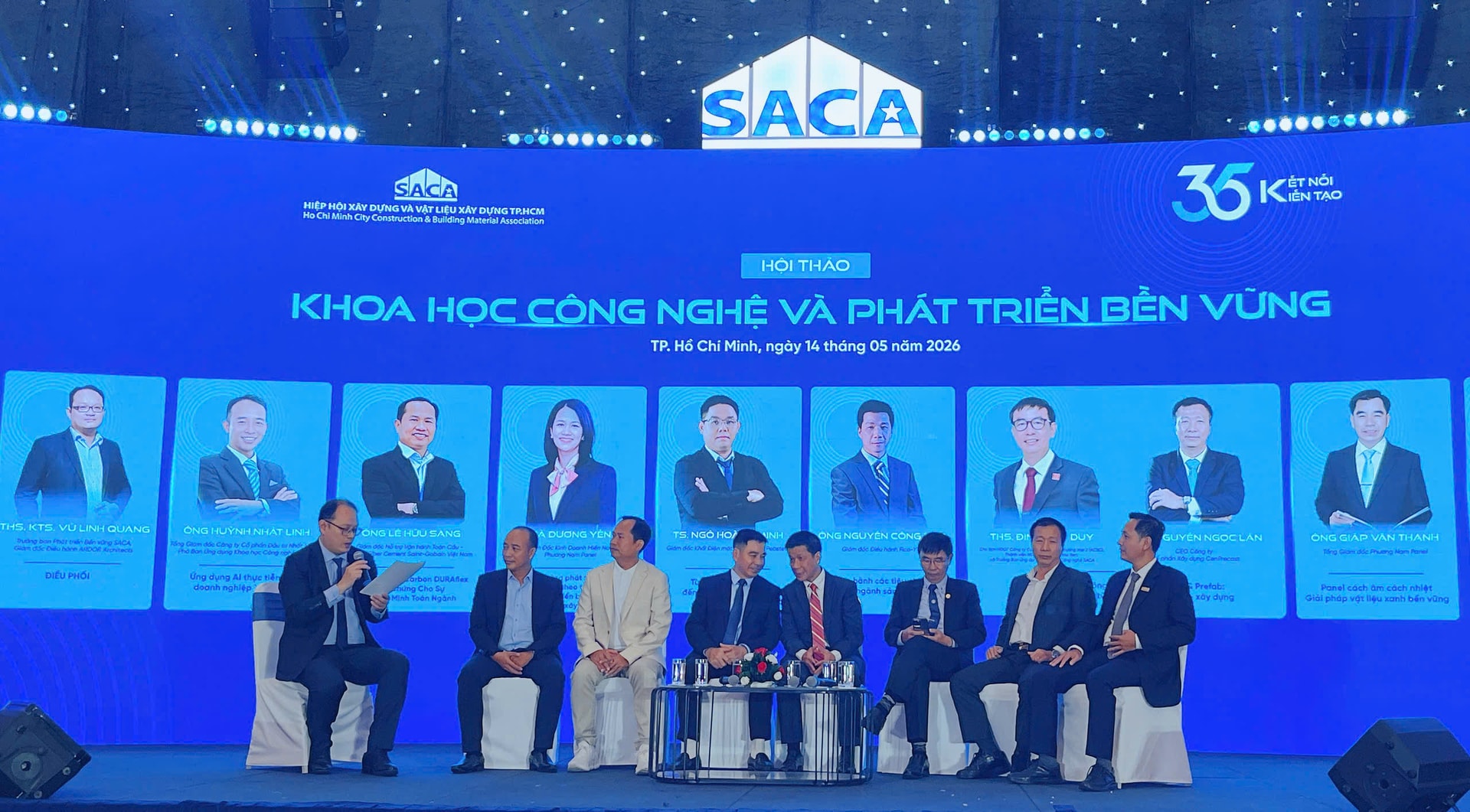
Mr. Vu Linh Quang, MSc., Architect - Managing Director of ARDOR Green - served as moderator for the afternoon session on 14 May.
The construction sector is now being asked to solve three major challenges at the same time: schedule, cost and sustainability.
Against a backdrop of labour shortages, volatile material prices and increasingly stringent ESG requirements from international investors, technology is becoming a business-critical capability rather than simply an additional competitive advantage.
Importantly, this pressure is not coming only from the domestic market.
Mechanisms such as the EU Carbon Border Adjustment Mechanism (CBAM), emissions auditing and carbon markets are turning CO₂ emissions into a tangible financial cost. In the coming years, high-emitting companies may face not only environmental pressure, but also direct consequences for their competitiveness and export costs.
This is particularly significant for energy-intensive sectors such as steel, cement and construction materials - industries that form the foundation of Vietnam’s construction sector.
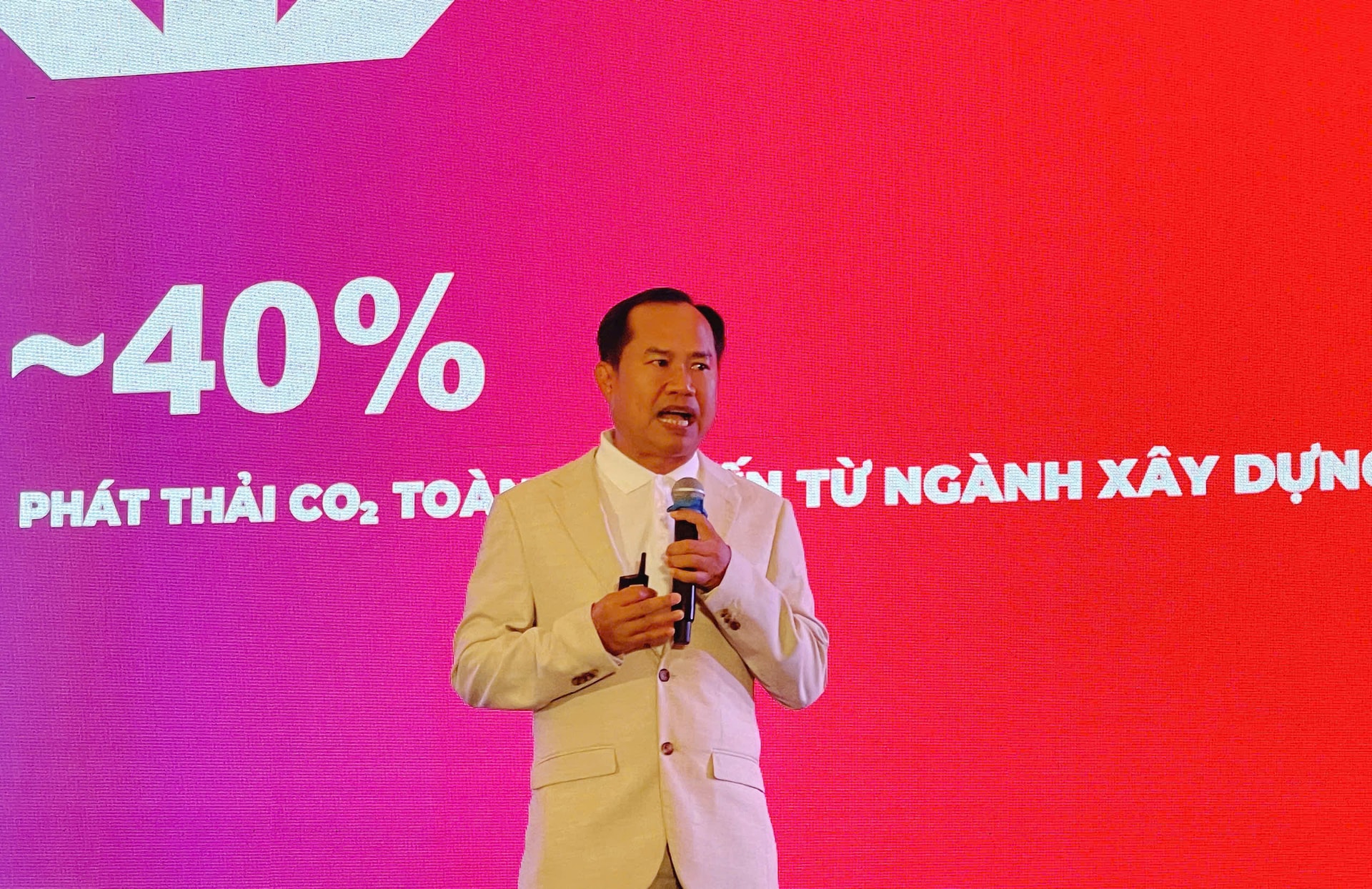 “The biggest gap today is not a lack of innovation. What the industry needs is a large-scale demonstration proving that green transition and zero-carbon manufacturing are entirely feasible in the building materials sector.” - Mr. Le Huu Sang, Global Operations Support Director, Fiber Cement
AI is changing how construction companies operate
One of the key themes highlighted at the seminar was the growing role of artificial intelligence in construction business operations.
AI is no longer limited to simple support tools. It is increasingly being applied to:
- Analysing tender documentation and evaluating company capabilities
- Managing cash flow and project performance
- Consolidating technical and regulatory information
- Optimising site operations and management
- Analysing customer behaviour and demand
In an industry that has traditionally depended heavily on labour and experience-based manual processes, AI can help businesses save time, reduce errors and accelerate decision-making.
However, technology only creates meaningful value when it is integrated into a broader operational strategy.
What the market needs today is not simply an understanding of AI, but the ability to apply AI in ways that generate measurable operational improvements and long-term profitability.
Zero Carbon is no longer a distant concept
One encouraging signal is that a growing number of building-material manufacturers in Vietnam have already begun implementing low-carbon and zero-carbon operating models at a practical scale.
Solutions currently being adopted include:
- Replacing fossil fuels with biomass such as rice husks and wood chips
- Using renewable electricity backed by internationally recognised I-REC certificates
- Electrifying internal operational vehicles
- Increasing the use of recycled materials and alternative raw materials
The significance lies not in the novelty of the technologies themselves, but in demonstrating that green transition can be implemented in practice even in heavy industry - traditionally considered one of the most difficult sectors to decarbonise.
Green materials and prefab are becoming inevitable trends
Alongside changes in operational technology, building materials are also evolving rapidly.
Traditional materials such as fired bricks and conventional concrete are increasingly revealing limitations related to emissions, energy consumption and construction-site waste.
In response, the market is shifting toward solutions with more sustainable life cycles, including:
- Lightweight insulated panels
- Pre-engineered steel buildings
- Recycled materials
- Prefabricated and precast systems
In particular, precast and prefabricated construction is emerging as a highly practical solution for the Vietnamese market.
Manufacturing building components in controlled factory environments can reduce construction time by approximately 20–40%, while also lowering dependence on weather conditions, optimising labour use and improving consistency in construction quality.
In a market facing shortages of skilled workers and increasingly demanding project schedules, this approach could become one of the construction industry’s strategic directions over the next five to ten years.
ESG will only scale when it delivers economic value
One important reality repeatedly emphasised by industry experts is that sustainability will be difficult to scale if it remains only an environmental message.
Businesses can only implement green transition at scale when ESG creates clear economic value - whether through lower operating costs, improved energy efficiency, better access to capital or stronger access to international customers.
In other words, the future of the construction industry will not belong to companies that simply “go green for communication purposes.”
It will belong to companies that can transform sustainability into a genuine competitive capability.
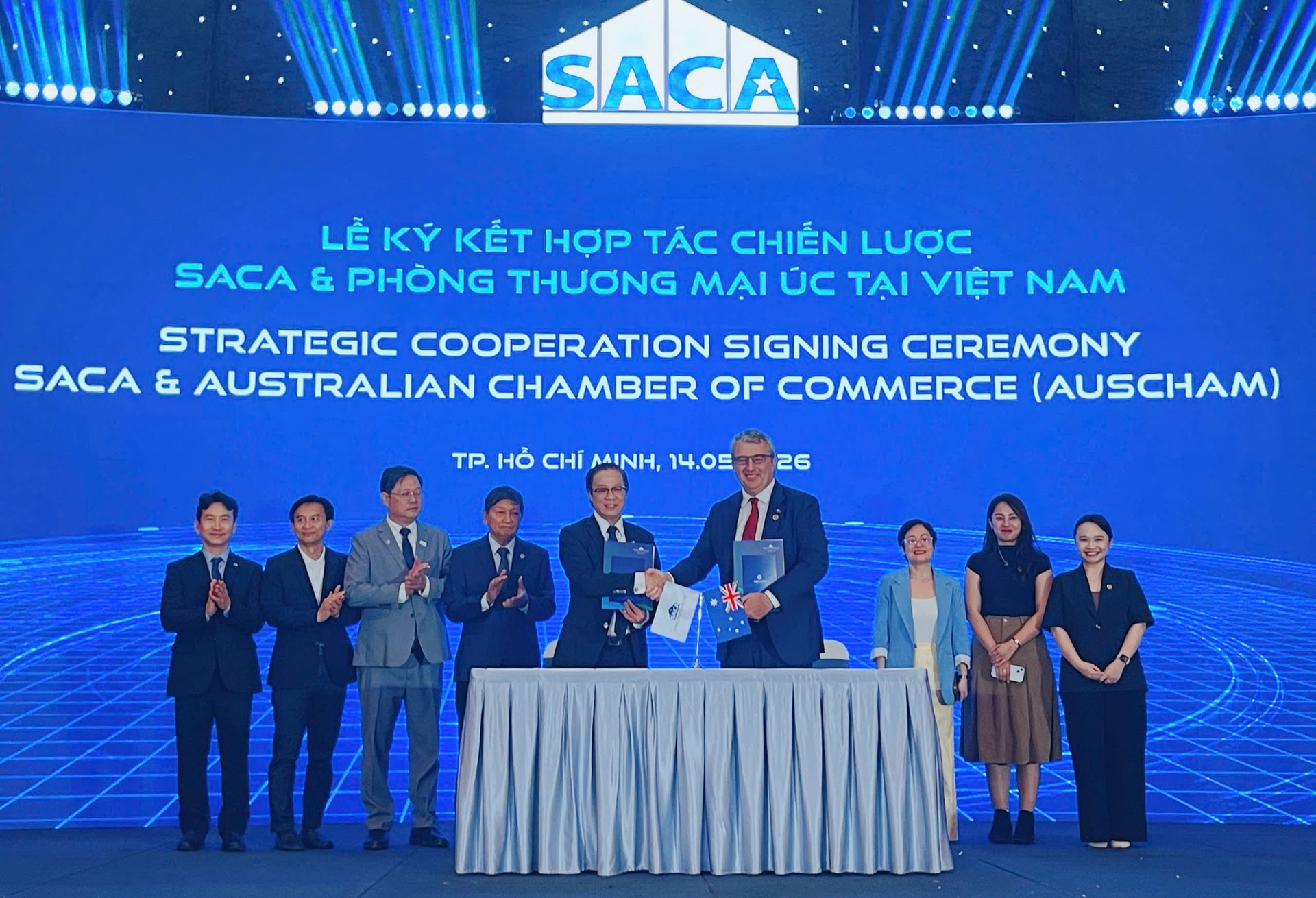
Strategic cooperation signing ceremony between SACA and the Australian Chamber of Commerce in Vietnam.
The strategic cooperation agreements between the Ho Chi Minh City Construction and Building Materials Association (SACA) and international organisations such as the Australian Chamber of Commerce in Vietnam and the French Chamber of Commerce and Industry in Vietnam also point to a broader trend.
Vietnam’s construction sector is becoming increasingly connected to the global business ecosystem - one in which sustainability standards are rapidly becoming a common language for the market.
Latest news

GRI standards now available in Vietnamese: What it means for ESG Reporting in Vietnam
On 14 September 2026, the Global Reporting Initiative (GRI) announced that the latest versions of its complete sustainability reporting Standards are now available in Vietnamese. The release covers the revised Universal Standards, all current Sector Standards and the latest Topic Standards, including GRI 101: Biodiversity 2024, GRI 102: Climate Change 2025 and GRI 103: Energy 2025. [1] GRI first made its Standards available in Vietnamese in 2017. The 2026 update brings Vietnamese-language users up to date with the current modular system and gives companies across the country direct access to the same reporting framework used internationally to identify, manage and disclose impacts on the economy, environment and people. [1] GRI is also expanding engagement in Vietnam through training, technical guidance and knowledge-sharing, with particular attention to small and medium-sized enterprises (SMEs). According to GRI, these programs are intended to help organizations assess sector-specific impacts, strengthen value-chain resilience and respond to disclosure expectations from international markets and sustainable finance providers. [1]

Green Finance in Vietnam: Buildings Seeking Capital Must Start with Data
On 18 September 2026, the Vietnam International Financial Centre in Da Nang (VIFC-DN) identified green finance and the carbon market as priority areas for development. The announcement was not accompanied by a specific lending product, but it sent a clear signal about the direction of green capital in the years ahead: projects will increasingly need to demonstrate environmental performance through data that can be measured, reviewed and independently verified. For developers, industrial asset owners, FDI companies and building operators, the key question is no longer simply “Is this building green?” The more important questions are: “What data proves that it is green, who verifies that data, and will the data continue to be maintained after financing has been disbursed?”

Green industrial parks: A key factor in attracting the next generation of FDI
As international investment increasingly prioritises sustainable development, green industrial parks are emerging as a new competitive benchmark for the market. The attractiveness of an industrial park is no longer determined solely by land availability or rental rates. Today, competitiveness depends increasingly on infrastructure quality, operational capability, ESG performance and the ability to create an efficient and sustainable production ecosystem for investors.


Circular economy under scarcity pressure: Is resource autonomy the solution?
Amid increasing resource scarcity and escalating geopolitical instability, the concept of resource autonomy is emerging as a strategic priority. This article examines how resource autonomy not only complements—but may even surpass—the circular economy as a framework for enabling industrial systems to adapt to the future.

Advancing Green Building Materials for Sustainable Development
As pressure to reduce carbon emissions continues to intensify, green building materials are becoming an increasingly important direction for Vietnam’s construction industry. Green material solutions can help improve energy efficiency, reduce operating costs and minimise environmental impacts. At the same time, the use of environmentally responsible materials can support projects seeking green building certifications such as LEED, LOTUS and EDGE. For businesses, this is becoming an important factor in strengthening competitiveness and supporting long-term sustainable growth.
Build Green, Build with ARDOR Green

