

Green Universities – The Inevitable Path of Sustainable Education
Share:
In the context of global green transition, universities are increasingly expected to take the lead in promoting sustainable development. The “green university” model is becoming a growing trend, with a comprehensive approach that goes beyond planting trees to include infrastructure design, operations, academic programs, and educational philosophy.
In the context of global green transition, universities are increasingly expected to take the lead in promoting sustainable development. The “green university” model is becoming a growing trend, with a comprehensive approach that goes beyond planting trees to include infrastructure design, operations, academic programs, and educational philosophy.
Green Transition Is More Than Just Planting Trees
Unlike the common perception, a green university integrates environmentally friendly elements into every aspect: sustainable construction materials, energy-efficient architectural design, effective waste and water management, and environmental education embedded in the curriculum. The goal is to create an inspiring learning environment that fosters sustainable thinking and responsible action among students.
The positive impacts of this model extend beyond campus. Students immersed in green environments tend to develop responsible lifestyles and consumption habits—key attributes for adapting to a sustainable future.
Global Lessons and Best Practices
Many leading universities worldwide have invested heavily in green transformation:
-
Stanford (USA) has used 100% renewable electricity since 2022, cut greenhouse gas emissions by 80%, and aims for carbon neutrality by 2050.
-
Oxford (UK) has allocated £200 million to its Sustainability Fund, targeting net-zero emissions by 2035.
-
NUS (Singapore) built a net-zero complex and established NUS Cities, a center for sustainable urban research.
-
Tsinghua University (China) has led the green university movement since 1998, with over 57% of its campus covered by greenery.
Vietnam: Great Potential, Significant Challenges
In Vietnam, the green university model is still in its early stages. According to the International Finance Corporation (IFC), part of the World Bank Group, the biggest barrier remains high initial investment costs, along with limited awareness and lack of supportive mechanisms. However, green building consultant ARDOR Green notes that if sustainable design is considered from the outset, the additional cost is only around 1% of the total investment. The main challenges lie in limited expertise and inadequate incentive policies.
BUV – A Leading Green University in Vietnam
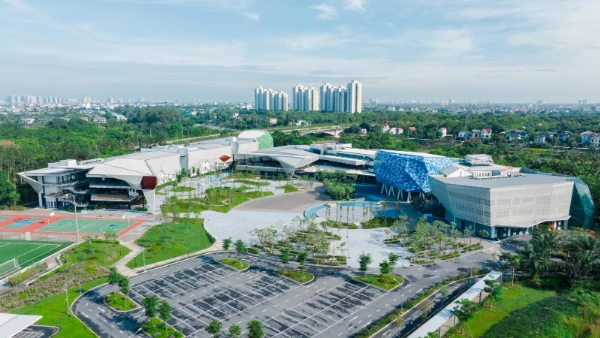
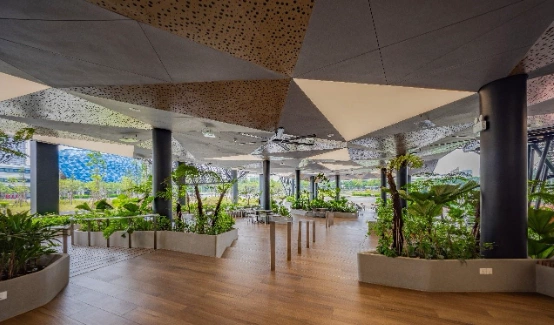
The British University Vietnam (BUV) is a pioneering institution in implementing a holistic green university model. From the design phase, BUV collaborated with ARDOR Green to incorporate:
-
Natural ventilation
-
High-efficiency air conditioning systems
-
Sustainable building materials
-
Passive design for energy savings
BUV is currently the only university in Vietnam to achieve the EDGE Advanced certification for both campus phases, with onsite energy savings of at least 40% compared to conventional buildings.
Beyond infrastructure, BUV also ensures accessibility for people with disabilities, including wheelchair-friendly learning and living spaces. The university plans to install solar panels by 2026 and aims to achieve carbon neutrality in the near future.
Sustainability in Mind and Action
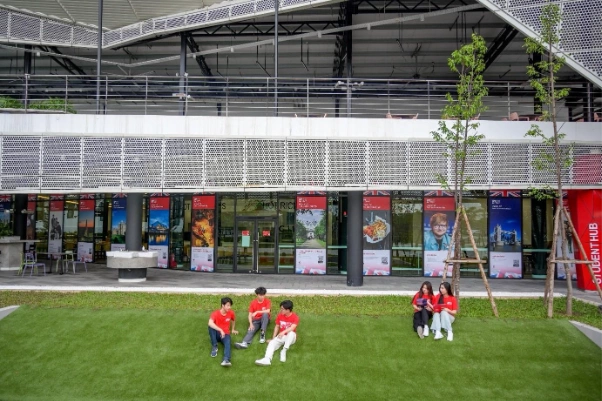
BUV’s green commitment extends into its educational philosophy. Courses in business ethics, sustainable development, and responsible tourism raise environmental awareness. Through the PSG (Personal and Social Growth) program, students are encouraged to participate in sustainability-related activities that enhance their social responsibility and environmental consciousness.
According to IFC representatives, BUV’s green campus helps save millions of kWh of electricity, thousands of cubic meters of water, and reduces up to 112,000 tons of CO₂ emissions per year—a remarkable figure demonstrating the effectiveness of their sustainable strategy.
The Future of Higher Education
As green transition becomes a global standard, BUV has asserted its pioneering role by embedding sustainability into education. This model not only brings value to the environment but also helps cultivate globally responsible citizens—ready to face the challenges of tomorrow.
Latest news

GRI standards now available in Vietnamese: What it means for ESG Reporting in Vietnam
On 14 September 2026, the Global Reporting Initiative (GRI) announced that the latest versions of its complete sustainability reporting Standards are now available in Vietnamese. The release covers the revised Universal Standards, all current Sector Standards and the latest Topic Standards, including GRI 101: Biodiversity 2024, GRI 102: Climate Change 2025 and GRI 103: Energy 2025. [1] GRI first made its Standards available in Vietnamese in 2017. The 2026 update brings Vietnamese-language users up to date with the current modular system and gives companies across the country direct access to the same reporting framework used internationally to identify, manage and disclose impacts on the economy, environment and people. [1] GRI is also expanding engagement in Vietnam through training, technical guidance and knowledge-sharing, with particular attention to small and medium-sized enterprises (SMEs). According to GRI, these programs are intended to help organizations assess sector-specific impacts, strengthen value-chain resilience and respond to disclosure expectations from international markets and sustainable finance providers. [1]

Green Finance in Vietnam: Buildings Seeking Capital Must Start with Data
On 18 September 2026, the Vietnam International Financial Centre in Da Nang (VIFC-DN) identified green finance and the carbon market as priority areas for development. The announcement was not accompanied by a specific lending product, but it sent a clear signal about the direction of green capital in the years ahead: projects will increasingly need to demonstrate environmental performance through data that can be measured, reviewed and independently verified. For developers, industrial asset owners, FDI companies and building operators, the key question is no longer simply “Is this building green?” The more important questions are: “What data proves that it is green, who verifies that data, and will the data continue to be maintained after financing has been disbursed?”

Green industrial parks: A key factor in attracting the next generation of FDI
As international investment increasingly prioritises sustainable development, green industrial parks are emerging as a new competitive benchmark for the market. The attractiveness of an industrial park is no longer determined solely by land availability or rental rates. Today, competitiveness depends increasingly on infrastructure quality, operational capability, ESG performance and the ability to create an efficient and sustainable production ecosystem for investors.


Circular economy under scarcity pressure: Is resource autonomy the solution?
Amid increasing resource scarcity and escalating geopolitical instability, the concept of resource autonomy is emerging as a strategic priority. This article examines how resource autonomy not only complements—but may even surpass—the circular economy as a framework for enabling industrial systems to adapt to the future.

Advancing Green Building Materials for Sustainable Development
As pressure to reduce carbon emissions continues to intensify, green building materials are becoming an increasingly important direction for Vietnam’s construction industry. Green material solutions can help improve energy efficiency, reduce operating costs and minimise environmental impacts. At the same time, the use of environmentally responsible materials can support projects seeking green building certifications such as LEED, LOTUS and EDGE. For businesses, this is becoming an important factor in strengthening competitiveness and supporting long-term sustainable growth.
Build Green, Build with ARDOR Green

