

How is New York Tackling its Garbage Issues?
Share:
The scene is almost identical, regardless of which borough you're in within New York City. Narrow sidewalks lined with garbage bags and other large items await collection by sanitation crews and trucks. Large rodents find shelter in makeshift plastic homes, scavenging discarded scraps—an all-too-familiar sight for New Yorkers. The city that never sleeps has a bigger problem than its flashing lights and noisy streets: it's the trash left on the sidewalks.
In a city of over 8.5 million residents, sidewalk trash has become a collective issue. Why has New York City ended up this way? Urban designers, politicians, and city workers agree that the city's methods for waste generation, sorting, transportation, and recycling (over 12,000 tons daily) have become outdated and inefficient. Other parts of the world, including major cities in France, South Korea, and the Netherlands, use street-level sorting bins and containers to keep public spaces clean and improve waste collection efficiency. Paris, with a population density similar to Manhattan, quickly introduced large bins for recyclable items on the streets. After piloting 40 units, the city found the program successful and subsequently ordered thousands more to expand the initiative citywide, aiming for a more significant impact. New York City needs to take similar large-scale actions.

However, not all aspects are failures, as some communities and neighborhoods have succeeded in managing waste. Roosevelt Island in New York City has used pneumatic tubes and compactors to store and transport waste for the past 50 years. The small Battery Park City neighborhood in Lower Manhattan, overseen by a state agency, also employs compactors to keep streets trash-free.
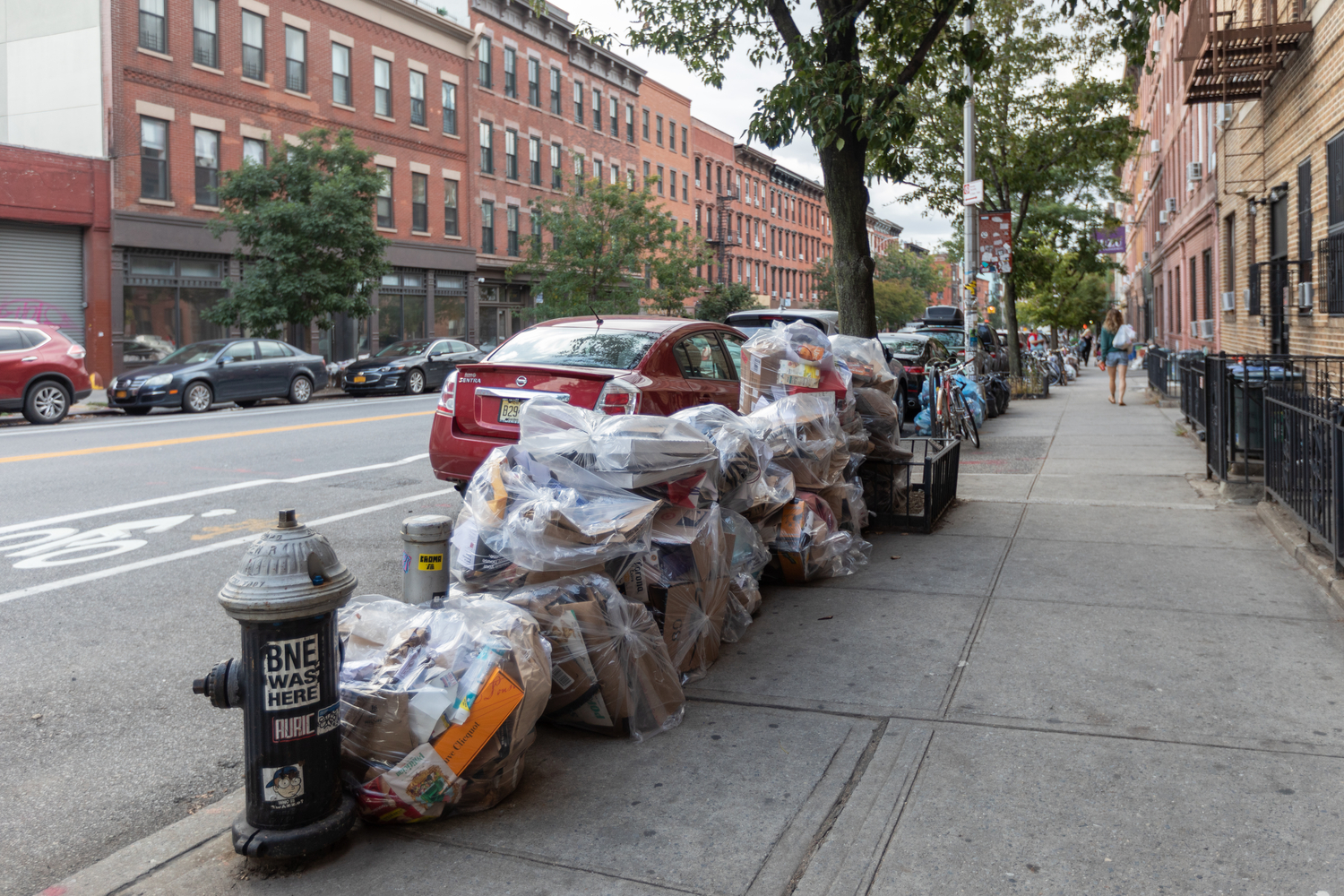
More than two years after its announcement, the "Clean Curbs" initiative is now being rolled out, with small-scale pilot programs being introduced citywide, starting with one of the city's busiest areas, Times Square. Additionally, just earlier this week, the city announced a new policy aimed at reducing trash output by limiting the time residents can put out garbage at night. Currently, trash can be put out as early as 4 p.m., but the new policy proposes no trash to be set out until 8 p.m., after most people have returned home. However, those with access to sealed containers can still put out trash at 6 p.m. This policy comes in response to a rise in street trash complaints, which increased to nearly 18,000 from 13,000 in the first six months of 2022.
Follow us for more Green ideas.
Build Green. Build with ARDOR Green.
#ARDORSeeds. #Architecture. #Green. #Interior. #Landscape. #Lighting.
Latest news

GRI standards now available in Vietnamese: What it means for ESG Reporting in Vietnam
On 14 September 2026, the Global Reporting Initiative (GRI) announced that the latest versions of its complete sustainability reporting Standards are now available in Vietnamese. The release covers the revised Universal Standards, all current Sector Standards and the latest Topic Standards, including GRI 101: Biodiversity 2024, GRI 102: Climate Change 2025 and GRI 103: Energy 2025. [1] GRI first made its Standards available in Vietnamese in 2017. The 2026 update brings Vietnamese-language users up to date with the current modular system and gives companies across the country direct access to the same reporting framework used internationally to identify, manage and disclose impacts on the economy, environment and people. [1] GRI is also expanding engagement in Vietnam through training, technical guidance and knowledge-sharing, with particular attention to small and medium-sized enterprises (SMEs). According to GRI, these programs are intended to help organizations assess sector-specific impacts, strengthen value-chain resilience and respond to disclosure expectations from international markets and sustainable finance providers. [1]

Green Finance in Vietnam: Buildings Seeking Capital Must Start with Data
On 18 September 2026, the Vietnam International Financial Centre in Da Nang (VIFC-DN) identified green finance and the carbon market as priority areas for development. The announcement was not accompanied by a specific lending product, but it sent a clear signal about the direction of green capital in the years ahead: projects will increasingly need to demonstrate environmental performance through data that can be measured, reviewed and independently verified. For developers, industrial asset owners, FDI companies and building operators, the key question is no longer simply “Is this building green?” The more important questions are: “What data proves that it is green, who verifies that data, and will the data continue to be maintained after financing has been disbursed?”

Green industrial parks: A key factor in attracting the next generation of FDI
As international investment increasingly prioritises sustainable development, green industrial parks are emerging as a new competitive benchmark for the market. The attractiveness of an industrial park is no longer determined solely by land availability or rental rates. Today, competitiveness depends increasingly on infrastructure quality, operational capability, ESG performance and the ability to create an efficient and sustainable production ecosystem for investors.


Circular economy under scarcity pressure: Is resource autonomy the solution?
Amid increasing resource scarcity and escalating geopolitical instability, the concept of resource autonomy is emerging as a strategic priority. This article examines how resource autonomy not only complements—but may even surpass—the circular economy as a framework for enabling industrial systems to adapt to the future.

Advancing Green Building Materials for Sustainable Development
As pressure to reduce carbon emissions continues to intensify, green building materials are becoming an increasingly important direction for Vietnam’s construction industry. Green material solutions can help improve energy efficiency, reduce operating costs and minimise environmental impacts. At the same time, the use of environmentally responsible materials can support projects seeking green building certifications such as LEED, LOTUS and EDGE. For businesses, this is becoming an important factor in strengthening competitiveness and supporting long-term sustainable growth.
Build Green, Build with ARDOR Green

